
Endure and Thrive – The Fortitude of a
Southern Italian Family,
Volume I: Storia del Cognome Patarino
History of the Surname Patarino, Updated February 2025
Table of Contents (see individual posts for each chapter PDF)
- Chapter 1, The Patarino Movement: 1045 to 1329
- Chapter 2, The Patarino Historical Family Document
- Chapter 3, The Surname Patarino: 1195 to 1698
- Chapter 4, Patarino’s Commune Natale of Castellaneta
- Chapter 5-A, Patarino Famigla Lineage: 1482 to 1919
- Chapter 5-B, Patarino Famiglia Lineage: 1885 to1979
Preface
In 1979, the same year my grandfather Egidio Antonio Patarino died, I was asked to write a high school report on my Italian family who had immigrated to the United States. After asking my parents for help, all I could include were a few family names and the notion that a Patarino may have been an Italian noble who had to flee northern Italy several hundred years ago. I remember being surprised by how little they knew about our Italian ancestors. Both my parents were first-generation born Italian-Americans and they didn’t know any details about their Italian heritage, where our family came from in Italy, or the names of family member’s further back than two generations. To further this inattention, I didn’t think about my Italian heritage again for twenty-six years. In 2004, after my grandmother Vincenza Patarino died, I began thinking about the huge sacrifices my ancestors made in leaving their native towns (commune natales) in Italy and immigrating 4,000 miles to the United States. I wanted to know more about my Italian heritage and the character of my ancestors. Who were they and where did they come from? Why did they leave Italy? This Storia del Cognome Patarino is the result of that research and it is their legacy.
It is my hope this Storia del Cognome Patarino is added to and corrected by my immediate and extended family and other Patarino’s in the United States and Italy. I consider this research a living document and as more information is gathered and conclusions made, this document will be further refined and re-presented. The information presented herein was obtained from discussions with family members in the United States and Italy, internet research (English and Italian web pages), books, and historical documents. To further this research, a trip to Italy will be required to examine original copies of historical records that can only be found in local archives (parish, commune, province, and region).

Introduction
The word “patarino” originated in Italy almost one thousand years ago; beginning in 1045 when a group of laymen in Milan launched a reform movement and clashed with the Roman Catholic Church to stop the corrupt practices of the clergy. These reformers met in the second hand merchant’s area of Milan, known as the Pataria, and were known as patarini or a patarino. After numerous clashes with the Church, the patarini reforms were realized and the movement ended when Bishop Anselmo, a leader of the patarini, was named Pope Alexander II and he issued the Dictatus Papae in 1075. Nevertheless, the Church considered the actions of the patarini as heresy due to their boycotting religious functions, which directly challenged the supremacy of the Church. In 1215, the Church issued a dictum that threatened excommunication for any person who refused the sacraments or questioned the supremacy of the Church; many such heretics were labeled by the Church as a patarino. (Chapter 1 explores the meaning of the word “patarino” and its historical beginnings.)
Over the next several hundred years, as new religious reform movements throughout Europe questioned the supremacy of the Church, such as the Albigensian (Catharism) and the Vaudois (Waldrensian), the Church believed it was in a state of anarchy. This was the beginning of the Inquisition where the Church initiated crusades against heretics who were systematically seized and severely punished.
In northern Italy, the use of the word patarino to describe a heretic, spread from Milan to the commune of Verona in the east and to the commune of Torino in the west. Torino, located in the Piemonte region, became an area of relative protection for many patarini and such heretical movements as the Vaudois. As the Church began to require the use of surnames around 1500 to prevent blood relatives from marrying, it’s not surprising that someone labeled as a heretic, maybe someone known as Giovanni un patarino (John a patarino), became Giovanni Patarino.
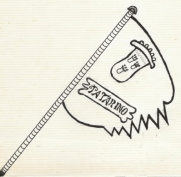
Our Historical Family Document, which includes our coat-of-arms, refers to our Patarino family as being established in 1500 and our ascendants earning the following credentials: the noble title of conte palatino in 1572, Consular in 1600; and elevation to a Council of Elders in 1660. In the Piemonte region during the 16th and 17th Centuries, there are numerous historical references to a noble Patarino family with the following credentials: Conte of Ceresole, Consular of Ceresole, Senator of Piemonte, Sindaco (Mayor) of Carignano, Deputy Auditor General of War, and Referendary of the Segnatura of His Royal Highness. Note the similar credentials during the same period of time. Even more interesting is that our Historical Family Document and these historical references identify “Giovanni Patarino” as a primary family member. Could this Piemonte Patarino family be the same family mentioned in our Historical Family Document? (Chapter 2 analyzes our Historical Family Document and its meaning and history.)
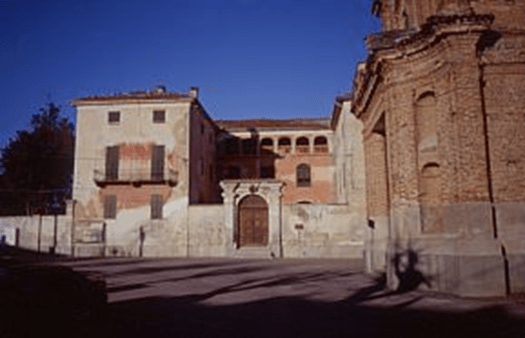
By the end of the 17th century, Piemonte had become the central theatre of the bloody Nine Years War between France and the Holy Roman Empire and the region suffered numerous guerrilla attacks, massacres, looting, plagues, and other atrocities. During this time, many Piemonte families fled the region to escape war and religious persecution and to begin new lives. From 1698 onward, I have not yet found any further references to the noble Piemonte Patarino family mentioned above; it’s as if they simply disappeared or fled to a safer area of the Italian peninsular. Our family folklore states that our southern Italy family fled from northern Italy; hence could this Piemonte Patarino family have migrated to southern Italy in the 16th century for the relative safety of the Puglia region in the Kingdom of Naples? We do not have any direct research linking this northern Italy Patarino family to our southern Italy Patarino family but the similarities in our family histories are intriguing and I continue to look for significant connections. (Chapter III explores the Piemonte Patarino family history and their possible connection to our Castellaneta Patarino family.)
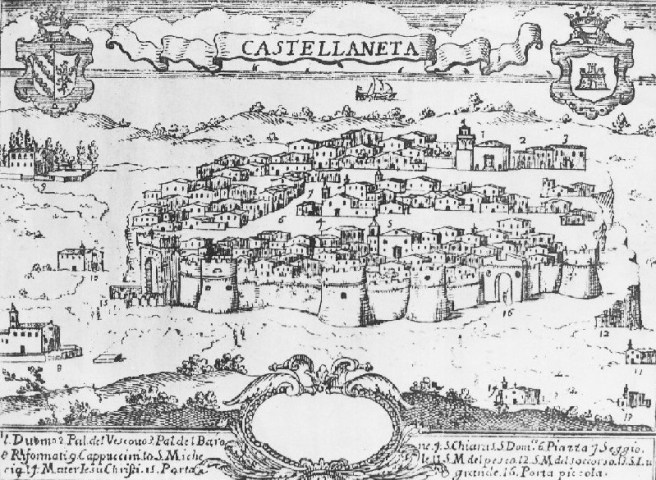
By the 16th century, Patarino families were known to be living in southern Italy in the commune of Castellaneta, Puglia region. Between 1600 and 1800, Patarino families in Castellaneta flourished as merchants and as landowners on a large agricultural estate known as a masseria. (Chapter IV details the Commune of Castellaneta and several Patarino historical connections.) Our generation-to-generation lineage currently has as its earliest known ancestor (our current progenitor) as being born in Castellaneta in 1498. By the late 19th century, after the unification of northern and southern Italy into one nation, southern Italy became severely overcrowded and racked by economic depression, chronic unemployment, political upheaval, and epidemics, which led to the Italian Diaspora where nine million Italians immigrated to the United States over a thirty year period.
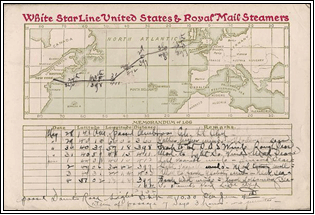
Between 1905 and 1913, our Castellaneta Patarino family joined the Italian Diaspora by sending four sons and one daughter four thousand miles to the United States to begin new lives. Of the many Patarino families living in Castellaneta at the time, ours was the only Patarino family to leave their commune natale or native town, which was an important part of their famiglia-centered culture. Nicola Vito Francesco Patarino, Francesco Vito Nicola Patarino, Vita Maria Ausilia Patarino, Vincenzo Patarino, and Salvatore Vito Nicola Patarino came to the United States with their wives and children but with little money, no jobs, and no other extended family. They came from a small, rural agricultural area of thousands to New York City, an urban city of millions where Italian immigrants routinely became victims of intimidation and violence. The break was definitely traumatic, yet our Patarino family flourished over the next one hundred years. (Chapter V-A and V-B details our Patarino generation-to-generation lineage from 1482 to 1979.)
As you read this Storia del Cognome Patarino, you will learn that we are the descendants of a courageous and tenacious family of survivors. This Storia del Cognome Patarino is the detailed story of our family, our history, our legacy.
Please forgive any mistakes in the translation of medieval and local dialect Italian words. Many such words are no longer used and I am neither a linguist nor an academic. Researching my family surname has been fun and I am delighted to share this research with my family and other people with the surname Patarino. For comments on the Storia del Cognome Patarino or to share family information, stories, pictures, or research, please email me at mpatarino63@gmail.com.
Kind Regards, Mike Patarino
 Patarino Family History